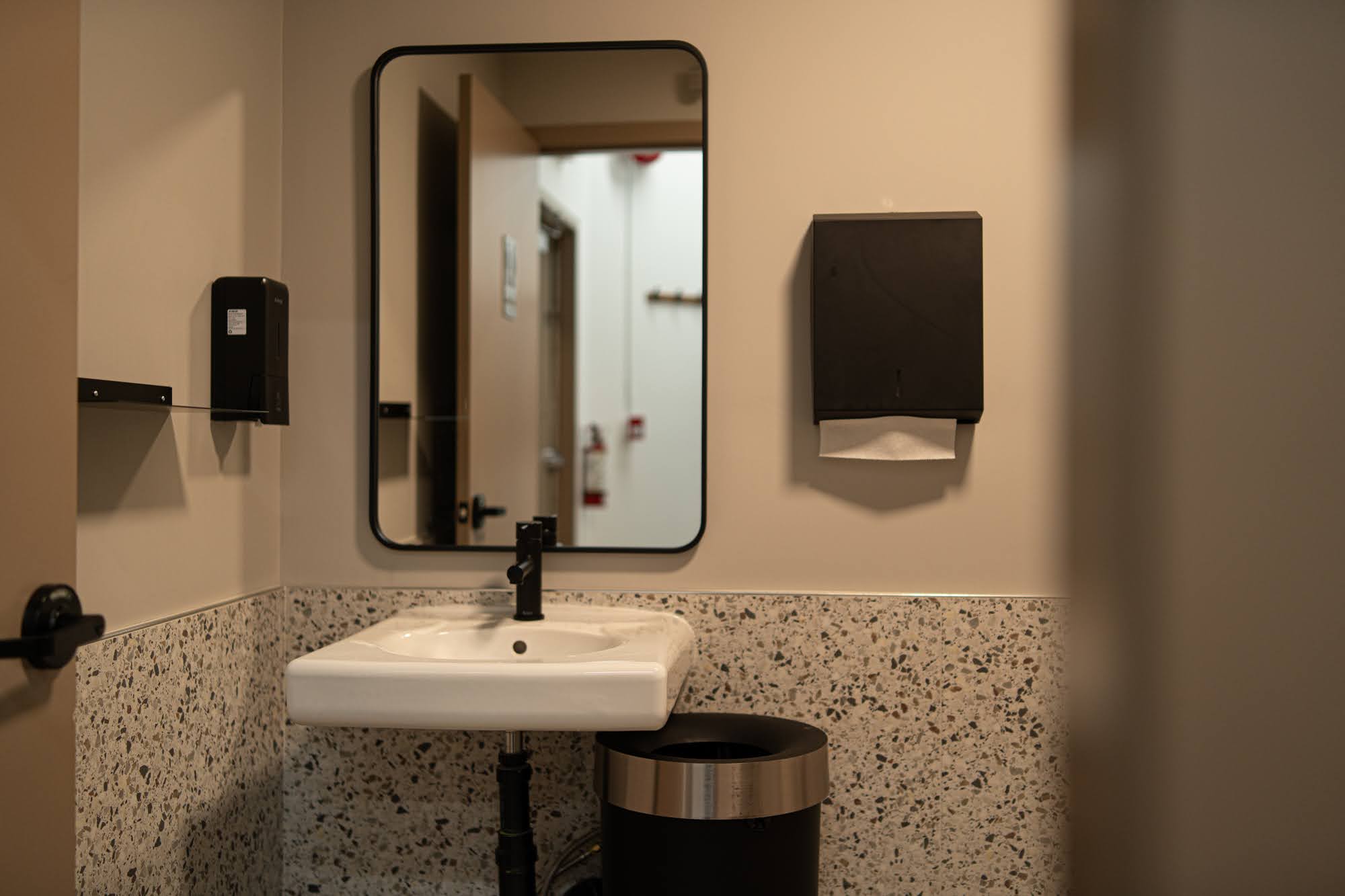
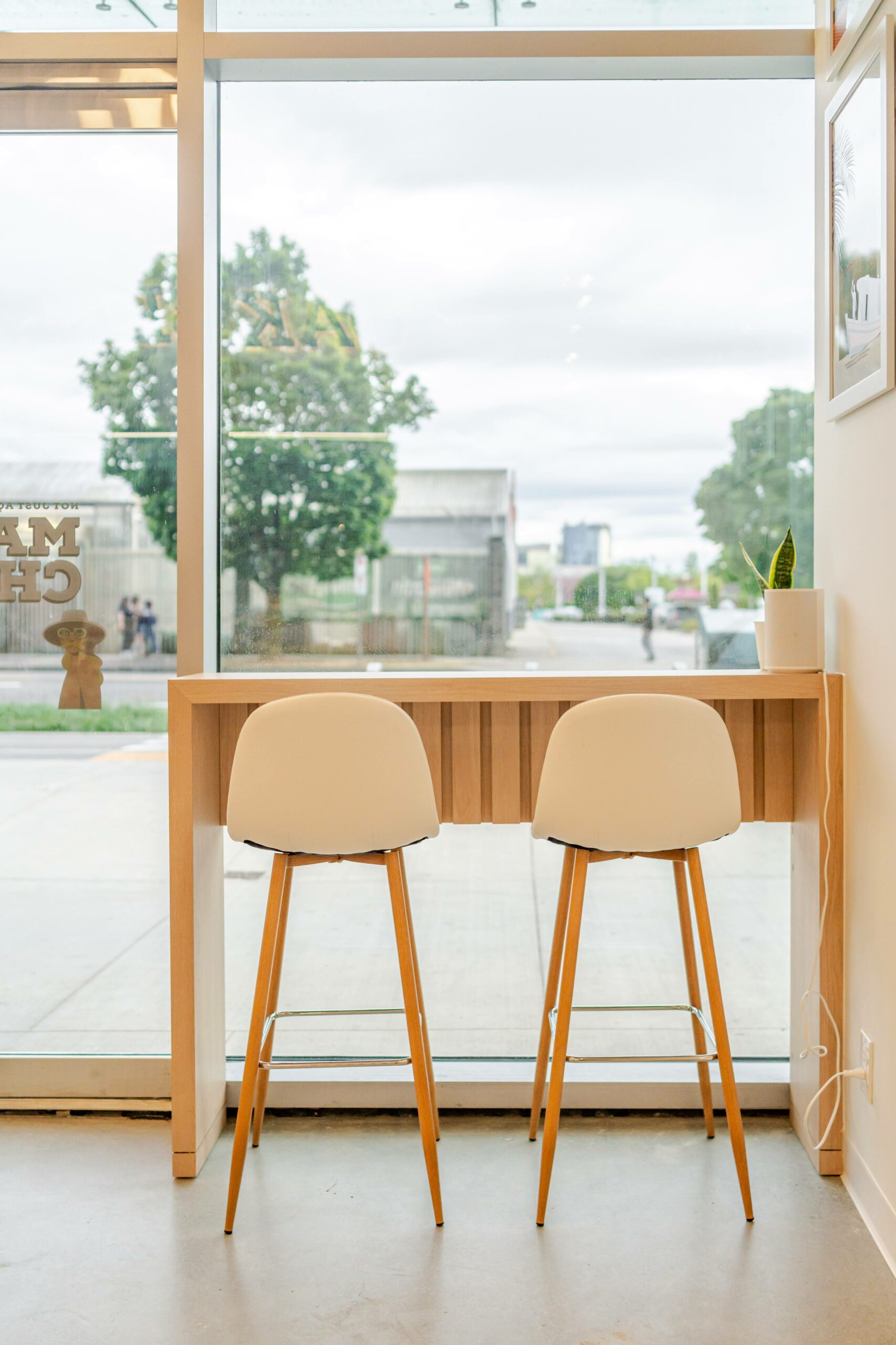
FF&E stands for furniture, fixtures, and equipment. In plain terms, it’s the movable stuff that fills a space but isn’t built into the building itself: the desks, chairs, sofas, lamps, and free-standing equipment you could, in theory, pick up and carry out the door. Wikipedia frames it as “movable furniture, fixtures, or other equipment that have no permanent connection to the structure of a building or utilities.” Bolted into the structure or wired into the plumbing? Usually not FF&E. Just sitting there doing its job? Probably is.
It’s also an accounting term, “used in valuing, selling, or liquidating a company or a building,” which is why FF&E turns up on budgets and balance sheets, not only on design drawings. Here’s how it actually works on a project, and why it matters more than most people expect.
What does FF&E stand for, and what counts?
Furniture, fixtures, and equipment. Broken down:
- Furniture — desks, chairs, sofas, tables, beds, bookcases, workstations.
- Fixtures — semi-attached but still removable items, like shelving, window treatments, or a freestanding reception fixture. (A plumbing fixture that’s permanently plumbed in is a different category.)
- Equipment — the working gear a room needs to do its job: monitors, AV, kitchen equipment, specialized medical equipment.
Wikipedia’s own list runs to “desks, chairs, computers, electronic equipment, tables, bookcases, and partitions.” Different from the construction itself, this is the layer that turns four finished walls into a working office, clinic, restaurant, or home.
FF&E vs OS&E: what’s the difference?
Easy to mix up, especially in hospitality. FF&E is the durable, movable stuff with a long useful life: the furniture, the fixtures, the equipment. OS&E stands for operating supplies and equipment, the consumable items a space burns through and restocks: linens, dishware, glassware, toiletries, stationery. Rule of thumb? If you’d expect it to last years, it’s FF&E. If you reorder it constantly, it’s OS&E.
Why does FF&E matter in interior design and construction?
More than people think. On any interior design project, the FF&E package is where the design concept becomes something you can actually sit on. It carries a real slice of the project cost. It has lead times that can stretch for months. And it ties straight into the construction schedule, because you don’t want a custom reception desk arriving before the floor goes down, or a week after the client has opened. Nail the specification early and the project lands on time. Miss it, and you’re the one explaining the delay.
That’s exactly why design and build under one roof helps: the people speccing the furniture are talking to the people running the site. Our FF&E package is built around that overlap.
How does FF&E procurement work?
Roughly in this order. The design team selects and specifies each item against the design intent, so the piece, the finish, the source, and the cost are all pinned down. Those specifications turn into purchase orders. A procurement team places the orders, chases lead times, and coordinates delivery and installation so things land in the right sequence. On a large hospitality or healthcare job, that’s easily hundreds of line items, which is why FF&E specification and procurement is so often its own dedicated workflow.
How much of a budget is FF&E?
It varies, and it varies a lot. A lean office fit-out might keep FF&E to a modest share of the total. A boutique hotel, or a medical clinic packed with specialized equipment, can see that share balloon. So there’s no single percentage worth repeating as gospel. The honest answer is to budget FF&E as its own line from day one, because treating it as an afterthought is exactly how projects sail past their numbers.
What goes into an FF&E schedule?
On a real project, FF&E lives in a schedule, which is basically a master list of everything that’s going into the space. Each line captures the item, the quantity, the full specification (dimensions, finish, fabric), the source or vendor, the lead time, and the cost. Done properly, that one document doubles as a budgeting tool and a procurement tracker. You can see at a glance what’s been ordered, what’s still outstanding, and where the money is actually going. It’s unglamorous work. It’s also the difference between a calm install week and a last-minute scramble, and on a project with hundreds of movable items, that gap is enormous.
Frequently asked questions
What does the term FF&E mean?
FF&E means furniture, fixtures, and equipment: the movable items in a space that aren’t permanently attached to the building. The term shows up in both interior design and accounting.
What are examples of FF&E?
Desks, chairs, sofas, tables, bookcases, lamps, partitions, and free-standing equipment like computers or kitchen gear. Basically the movable contents that make a space usable.
What is the difference between OS&E and FF&E?
FF&E is durable and long-lived: furniture, fixtures, equipment. OS&E, operating supplies and equipment, is the consumable stuff you replace often, like linens, dishware, and toiletries. Hospitality projects track the two separately.
What is the 3-5-7 rule in decorating?
It’s a styling guideline rather than an FF&E term: group decorative objects in odd numbers, threes, fives, sevens, because odd groupings tend to read as more natural than even ones. Handy for shelves and tabletops once the FF&E is in place.