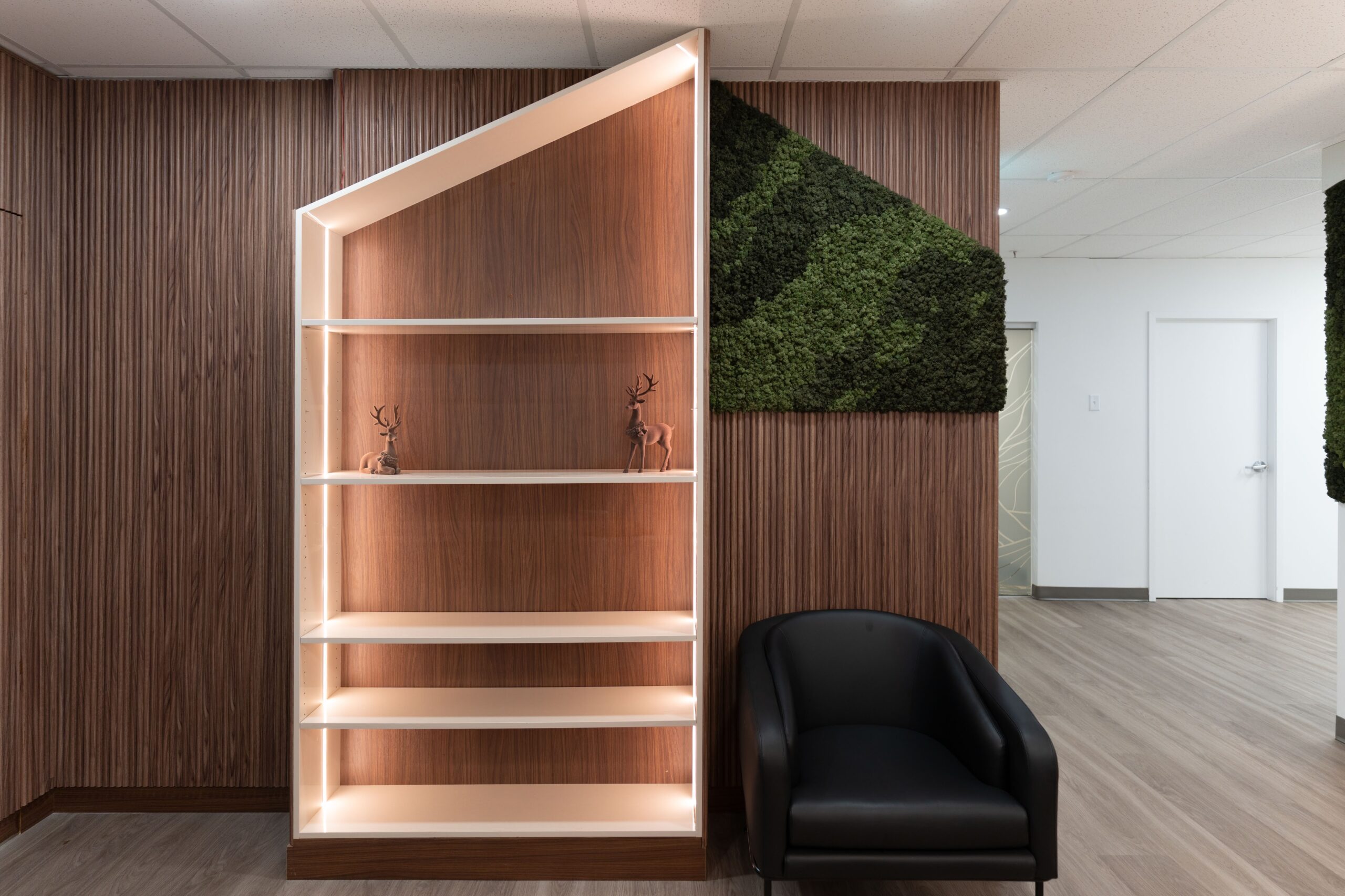
Short version: millwork is the woodwork a mill shapes and a crew installs in your space. Baseboards, trim, moldings, doors, window casings, stair parts, the built-in cabinetry running down a hallway. If it was milled to a profile somewhere and then fitted into a room, you’re looking at millwork. People have used the word this way for more than a hundred years. Wikipedia still calls it “historically any wood-mill produced decorative material used in building construction,” which is a mouthful, but it holds up.
We get asked about this constantly, usually halfway through a renovation. So here’s the no-jargon rundown: what counts, how it differs from casework and cabinetry, and what you should expect to pay.
What does millwork include?
More than most people think. Walk through a finished room and you’re touching it everywhere:
- Trim and moldings, like crown molding, baseboards, and the casing around doors or windows
- Doors and windows, transoms and sidelights included
- Stair parts, so railings, balusters, newel posts
- Wall paneling, wainscoting, decorative columns
- Built-in cabinetry and custom shelves
The common thread? Every one of these is made to a drawing, not grabbed off a warehouse rack. That’s the part you feel without noticing. It’s the reason a room reads as finished even when you can’t quite say why.
Millwork vs casework: what’s the difference?
People swap the two words around all the time. They shouldn’t. Casework is the box-shaped, standardized stuff: modular cabinets, lockers, shelving cut to set sizes. Millwork is custom. It’s shaped for one specific space, so it’ll happily follow a crooked wall or a sloped ceiling that no off-the-shelf unit could ever fit. Quick rule of thumb: casework gets mass-produced to standard sizes, millwork gets tailored to your project.
And cabinetry? It sits right in the middle. As Wikipedia puts it, a cabinet is “a case or cupboard with shelves or drawers for storing or displaying items.” Stock ones behave like casework. Built-in, made-to-measure ones behave like millwork.
What is architectural millwork?
This is the showpiece end of the trade. Architectural millwork means custom pieces drawn for one particular building and matched to the interior design down to the detail: a reception desk, a slatted feature wall, integrated lighting, a run of bespoke cabinetry. It’s where custom millwork and interior design basically become the same conversation. And honestly, it’s where having design and build under one roof earns its keep, because the drawings actually match what shows up on site.
Is millwork the same as carpentry?
Nope, though they’re cousins. Carpentry is the broad trade: building and installing wood structures right there on site. Millwork is the decorative woodwork that gets made at a mill, off site, then delivered and installed. A carpenter might be the one fastening it to your wall, sure. But the piece itself was already built somewhere else. Related, not identical.
What materials are used in millwork?
Traditionally, solid lumber. Pine, oak, maple, fir. These days, just as often medium-density fibreboard (MDF) or some other engineered material. As Wikipedia notes, modern millwork “may encompass items that are made using alternatives to wood, including synthetics, plastics, and wood-adhesive composites.” Translation: your options have widened a lot. What’s right for you really comes down to four things. Budget. The finish you’re after. How much moisture the piece will face. And whether it’s there to look pretty or take a beating.
Where does millwork fit in a project?
Late in the build, and right where everyone’s looking. In a restaurant, it’s the bar and the banquettes. In a clinic, the reception desk and the storage wall. At home, the kitchen, the stairs, the trim. Because it bolts straight onto the floor plan and the finishes around it, the smart move is to plan the woodwork early, alongside the design and the schedule. Leave it to the end and you’re inviting the kind of rework nobody wants to pay for.
How much does millwork cost?
It depends, and anyone who hands you a flat number sight unseen is guessing. Plain trim and baseboards are pretty affordable by the linear foot. Custom cabinetry, paneled feature walls, detailed architectural millwork? Those climb, because now you’re paying for design time, better material, and skilled hands. The sanest way to budget is to price the work as part of the whole renovation or fit-out, not as some bolt-on line item. That keeps the woodwork talking to everything around it.
Frequently asked questions
What is considered millwork?
Pretty much any milled wood element that gets installed in a space. Trim, moldings, baseboards, doors, window casings, stair parts, wall paneling, built-in cabinetry. All of it counts.
What is an example of millwork?
Crown molding is the classic one. Baseboards too, plus a built-in bookcase, a paneled accent wall, or a milled stair railing.
What is millwork vs cabinetry?
Cabinetry is one slice of millwork. Millwork is the big umbrella for milled woodwork; cabinetry is specifically the cases and cupboards with shelves or drawers. So your custom, built-in cabinetry? That counts as millwork.
Is millwork the same as woodwork?
Not quite. All millwork is woodwork, but not all woodwork is millwork. Millwork is the stuff made at a mill specifically, while woodwork is anything made out of wood.