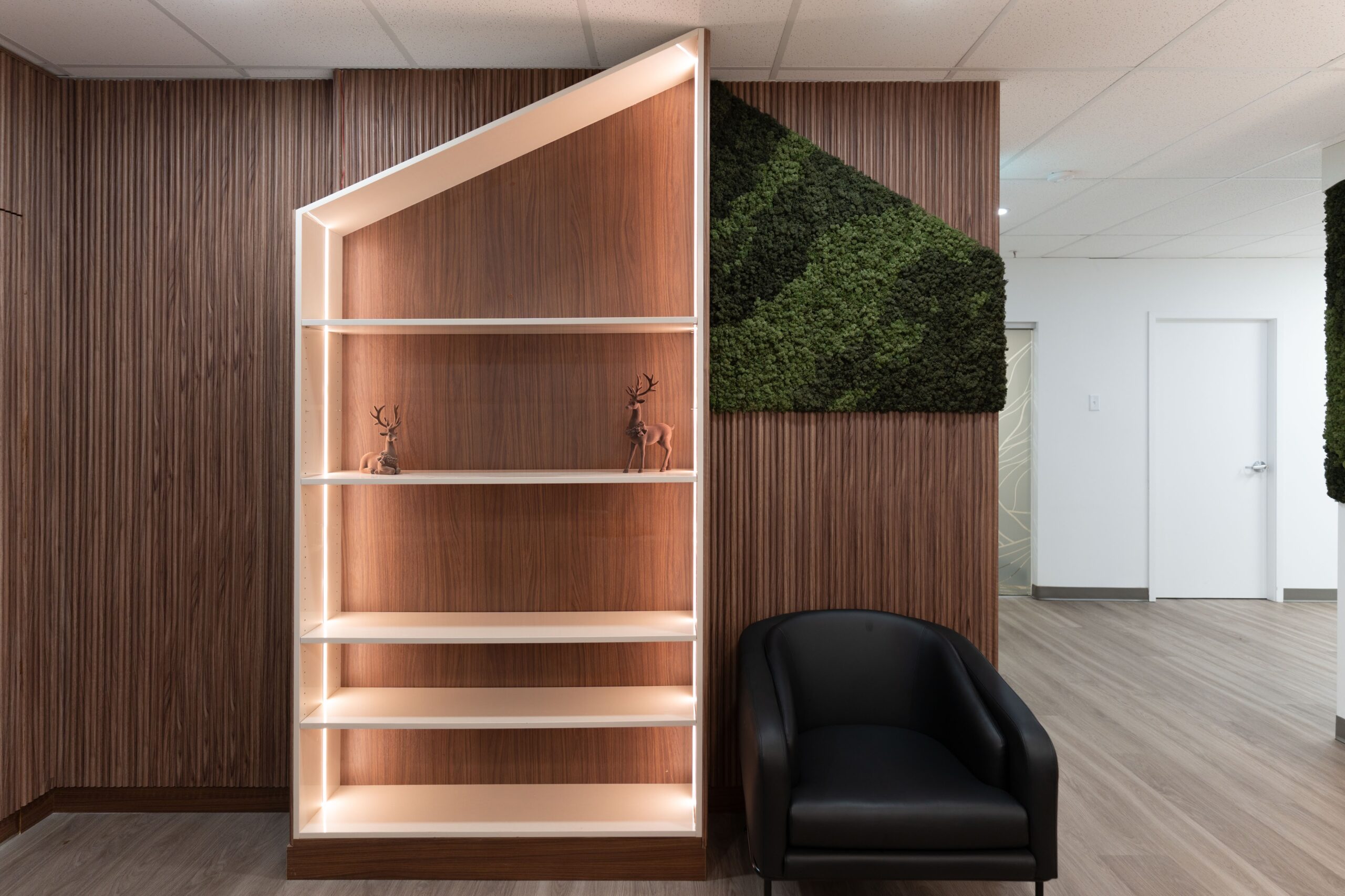
A tenant improvement is a renovation made to a leased commercial space to fit a specific tenant’s business. New walls. Flooring, lighting, plumbing, maybe a custom reception desk. All of it built so the space actually works for how you operate. You will also hear it called a build-out, a TI, or simply the work that turns a bare shell into a clinic, a cafe, or an office.
We are Ark & Mason, a Vancouver design-build firm, and we walk tenants through this every single week. So let us break it down without the jargon.
What is a tenant improvement, exactly?
A tenant improvement is any change made to the interior of a leased commercial space so it suits the tenant’s needs. The landlord owns the building. The tenant customizes the space inside it. That customization, from partition walls to upgraded HVAC, is the tenant improvement.
Here is the legal backdrop. Cornell Law School’s Legal Information Institute explains that “A lease between a landlord and a tenant creates both a contractual interest and a property interest, the property interest here is called leasehold.” A tenant improvement lives inside that leasehold. In plain terms? You are improving space you do not own, for the length of the lease.
Why does this matter so much in commercial real estate? Because a raw space rarely matches a real business. A med-spa needs treatment rooms and proper plumbing. A restaurant needs a commercial kitchen. An office needs meeting rooms and cabling. The build-out is how a generic floor becomes yours.
What are some examples of tenant improvements?
Examples of tenant improvements include new flooring, interior partition walls, custom millwork, lighting, ceilings, paint, and upgrades to electrical, plumbing, or HVAC systems. Pretty much anything that customizes the leased space for one tenant counts.
A few we see constantly on our Lower Mainland projects:
- Framing and finishing new rooms or treatment bays
- Installing a reception desk, fixtures, and built-in cabinetry
- Upgrading electrical systems for new equipment loads
- Adding or relocating plumbing for sinks, washrooms, or a kitchen
- Replacing the floor and refreshing every surface a client will see
And what is usually not a tenant improvement? Structural changes to the building, the roof, or the foundation. Those belong to the landlord and the property itself. Movable furniture tends to sit in its own category too, since it is not attached to the space.
What is a tenant improvement allowance (TIA)?
A tenant improvement allowance is a sum of money provided by the landlord to help cover the cost of the build-out. It is usually expressed as a per-square-foot amount, and it is one of the most common lease incentives in any competitive real estate market. People shorten it to TI allowance, TIA, or sometimes TIPs.
Wikipedia, describing the broader category of tenant inducements, puts it this way: “Inducements can also be provided in the form of compensation for tenant improvements, which takes the form of either direct payments that the tenant can use to improve the rental unit, or similar renovations carried out by the landlord.” So the allowance might land as cash you spend. Or as work the landlord arranges. Either way, the goal is the same: the landlord wants a high-quality tenant to sign and stay.
So how big is a reasonable TIA? It swings with the market, the lease term, and the condition of the space. A longer lease usually unlocks a larger allowance, because the landlord has more time to recover the cost through rental income. There is no single right number. Which is exactly why the figure is negotiable.
How does a tenant improvement allowance work?
A tenant improvement allowance works as a negotiated dollar amount the landlord agrees to put toward your build-out, written into the lease agreement. You and the landlord settle on the scope of work, the agreed-upon amount, and who manages the construction. Then the money flows, usually as reimbursement once invoices are submitted.
For the landlord, the TIA is a capital expenditure they amortize over the life of the lease. They will often recover it through slightly higher rent, and they treat the improvements as a long-term value add to the commercial property. For you, the tenant, the allowance lowers your upfront construction costs and frees up cash for the rest of the business.
One detail trips people up. Who owns the improvements at the end? In most commercial leases, the landlord owns the improvements once the lease ends, since they are attached to the building. The tenant gets the use and the benefit during the lease term. That single fact shapes how hard you should push on quality versus cost.
How can tenants keep control during TI negotiations?
Tenants keep control during a TI negotiation by nailing down the scope, the budget, and the decision rights before signing. Vague lease language is where build-outs go sideways. Specifics protect you.
Here is the short checklist we hand our clients:
- Get the allowance in writing, with a clear per-square-foot or total dollar amount.
- Define exactly what the allowance covers, from permits and architectural and engineering fees to finishes.
- Decide who hires and manages the contractor. Control over design usually means controlling the build.
- Confirm the timeline, including the building permit process, before you commit to an opening date.
This is where having design and construction under one roof earns its keep. When the same team handles concept development and construction management, the budget and the drawings stay in sync. And you are not stuck refereeing a fight between a designer and a builder who have never met.
How does Ark & Mason handle a build-out?
We run tenant improvements as an integrated design-build process, so one accountable team takes you from idea to handover. Concept, 3D renderings, permits and code, custom millwork, and full construction management all live in one place. No finger-pointing. No surprise gaps.
That matters because a commercial build-out has a lot of moving parts. Permits. Inspections. Engineering coordination. A scope of work that has to match a real budget, not a wish list. When those pieces are managed together, the project moves faster and the cost stays honest. You can see how we structure that on our process page, and the range of work we cover on our services page.
Frequently asked questions
What is the meaning of tenant improvements?
Tenant improvements are renovations made inside a leased commercial space to fit a specific tenant’s business, such as walls, flooring, lighting, and plumbing. The tenant customizes the interior, while the landlord owns the building. They are also called build-outs or TIs.
Can tenants make improvements?
Yes, tenants can make improvements, but the lease agreement sets the rules. Most commercial leases require landlord approval for the scope of work, and a tenant improvement allowance often helps cover the cost. Always confirm what is permitted in writing before construction starts.
What does a tenant improvement allowance typically cover?
A TIA typically covers the construction costs of customizing the leased space, including partition walls, flooring, lighting, and often architectural and engineering fees and the building permit. It usually does not cover movable furniture or structural changes to the building. The exact coverage is set during negotiation.
Who pays for tenant improvements?
Costs are usually shared. The landlord contributes through a tenant improvement allowance, and the tenant pays for anything beyond that amount. How the split lands depends on the lease term, the real estate market, and how much each side wants the deal.